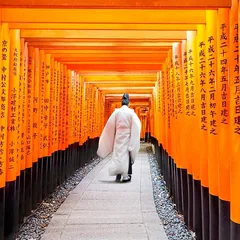
The short answer
Fushimi Inari Taisha tickets: there are none, and entry is free
This page exists because a lot of people are searching for something that does not exist. Fushimi Inari Taisha has no ticket, no entrance fee and no gate that closes. If a site is quoting you a price for admission, it is selling you a guided tour and hoping you will not read closely.
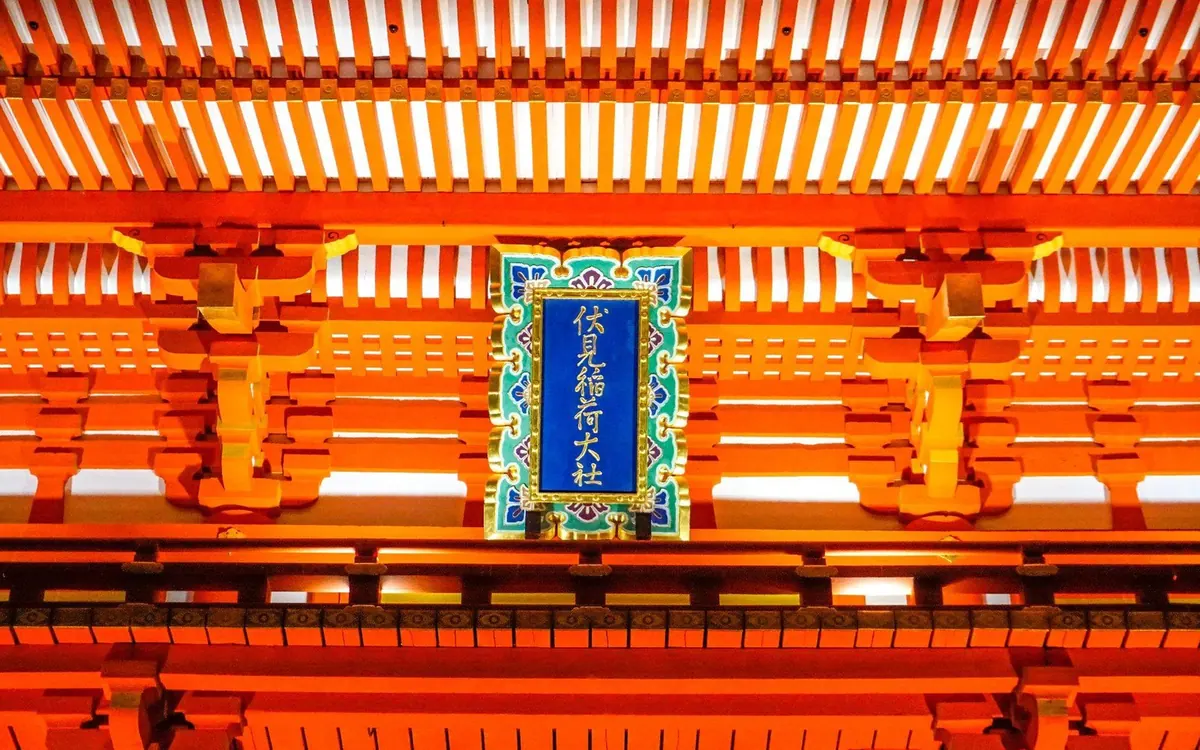
Quick answer
There is no entrance fee for Fushimi Inari Taisha and no ticket to buy. The shrine grounds and the mountain paths are open 24 hours a day, 365 days a year, and nothing is checked at the entrance. The only costs of a visit are getting there — about $1.10 on the train from Kyoto Station — and anything you choose to buy at the amulet counter or the food stalls, which keep roughly 9 am to 5 pm hours.
What a visit actually costs
- Entrance fee
- Freethere is no ticket office on site
- Booking required
- Nonothing to reserve, ever
- Open
- 24 hours365 days a year, New Year included
- Train from Kyoto Station
- $1.10two stops, about five minutes
- Covered by JR Pass
- Yesthe JR Nara Line is a JR service
- Amulets and charms
- From ~¥500counter open roughly 9 am to 5 pm
- Food stalls
- ¥300–800along the approach, daytime only
- Lockers at Inari station
- ¥400–700useful if you are carrying luggage
- A guided day
- From $50and that is what people actually pay for
- Cancellation on tours
- Free to 24 hon every tour on this site
Why the confusion
Why do people think Fushimi Inari has an entrance fee?
Shrines are usually free. Temples usually charge. Fushimi Inari is a shrine.
Three reasons, and all three are understandable.
The first is that most famous sights in Kyoto do charge. Kinkakuji, the golden pavilion, charges. Kiyomizu-dera charges. Ginkakuji, Ryoanji, Tenryuji and the Arashiyama bamboo garden all charge. Somebody planning a Kyoto day reasonably assumes the most famous sight of all charges too, and it does not.
The second is the distinction between shrines and temples. Shinto shrines in Japan are usually free; Buddhist temples usually charge. Fushimi Inari is a shrine. Most of the paid sights on a Kyoto itinerary are temples. That single rule of thumb explains almost the whole pattern, and English-language pages rarely spell it out.
The third is that resellers list guided tours under words like “tickets” and “admission”. It is not a lie exactly — you are buying a ticket to something — but for a visitor searching “Fushimi Inari tickets” it reads as though entry costs money. It does not.
What you can spend money on
Six things at Fushimi Inari that do cost something
None of them are required, and all of them are optional in the plainest sense.
- An omamori charm
The amulet counter beside the main hall sells protective charms, most from around five hundred yen. The business-prosperity ones are the local speciality, this being the shrine of commerce.
- An ema plaque
Small wooden votive tablets. At Fushimi Inari many are shaped like a fox’s face and left blank for you to draw on, which is why the racks here look like nothing else in Japan.
- Omikuji fortunes
Paper fortunes, usually a hundred or two hundred yen. Fushimi Inari has an unusually elaborate scale with grades that do not exist at most shrines.
- Food on the approach
The street up from the station is lined with stalls. Grilled quail and sparrow are the traditional local dishes and they are exactly as unusual as they sound; inari-zushi is the safer and very good alternative.
- A vending machine on the mountain
There are several, and prices climb with the altitude in a way that feels entirely fair by the time you reach them.
- A guided day around it
The one genuinely large expense, and the only one that buys something the shrine itself cannot: an early arrival, or Nara and Arashiyama in the same day. From $50.
If you are pricing a Kyoto day, the sights that do charge are the ones worth checking — and one tour here covers all of them in the ticket.
Which tour includes the paid entries→Every trip, current fare
What a guided day costs, if you want one
Twelve tours, cheapest first. Every one includes Fushimi Inari, which is free, so read these prices as the cost of everything else in the day.
| Tour | Length | Price | Other stops | Cost per hour | Rating |
|---|---|---|---|---|---|
| Nara, Fushimi Inari & Arashiyama Bus TourThree sights, one coach, the lowest price here | 9–10 h | $50 | Nara, Arashiyama | $5.26 | 4.8 · 3,168 |
| Early Morning Fushimi Inari & ArashiyamaThe only one that beats the crowd to the gates | 6 h | $62 | Arashiyama, Kinkakuji | $10.33 | 4.9 · 1,597 |
| Kyoto by Bus: Nijo, Bamboo Grove & Fushimi InariNijo Castle and the bamboo, in English or Spanish | 11 h | $62 | Nijo, bamboo grove | $5.64 | 4.7 · 761 |
| Crowd-Free Kyoto: Fushimi Inari, Nijo & KinkakujiFive hours, and built around the early start | 5 h | $67 | Nijo, Kinkakuji | $13.40 | 4.5 · 23 |
| Private Tour: Fushimi Inari & BambooA licensed guide for your group alone | 3.5–6 h | $68 | Arashiyama bamboo | $14.32 | 4.9 · 6 |
| Kyoto Bus Tour: Fushimi, Kiyomizu, Kinkakuji & ArashiyamaThe five names everybody knows, in one day | 10 h | $81 | Kiyomizu, Kinkakuji, Arashiyama | $8.10 | 5.0 · 72 |
| Kyoto Full-Course: 10 Must-SeesTen stops for a single day in Kyoto | 9.5 h | $92 | Ten in total | $9.68 | 4.9 · 194 |
| Fushimi Inari, Kinkakuji & Bamboo GroveSix sights with every entry ticket included | 8.5–9 h | $93 | Kiyomizu, Kinkakuji, bamboo | $10.63 | 4.8 · 5,297 |
| Full-Day City Highlights Bike TourThe whole city by bicycle, lunch included | 8 h | $171 | Gion, Kiyomizu, bamboo | $21.38 | 4.9 · 56 |
| Customized Private Tour with Licensed GuideA licensed guide, and the route is yours | 4–8 h | $201 | Your choice | $33.50 | 4.8 · 523 |
| Private Highlights Tour with Guide and VehicleA car and driver for the whole day | Full day | $295 | Your choice | $36.88 | 4.9 · 121 |
| Private Highlights Tour with Guide and VehicleA driver-guide, and you write the itinerary | Full day | $415 | Your choice | $51.88 | 4.6 · 471 |
Getting in
Do you need to book anything to visit Fushimi Inari Taisha?
Nothing to book, nothing to reserve, nothing checked at the door.
No. There is nothing to reserve, no timed entry, no queue system and no capacity limit. You walk in. This is true at eleven in the morning in peak autumn and at four in the morning in February, and it has been true for a very long time.
The only thing worth booking in advance is a guided tour, and only if you want one. Those do sell out in the two busy windows — the autumn colour in late November and the cherry blossom in the first week of April — and booking two or three weeks ahead in those periods is sensible. Eleven of the twelve tours here cancel free up to 24 hours before; the ten-stop full-course day is the exception.
One practical note that catches people out: there are no bag lockers at the shrine itself. If you are arriving with luggage, use the coin lockers at Inari station or at Kyoto Station before you come. The mountain path is four kilometres of stone steps and a wheeled suitcase is not going up it.
Common questions
Fushimi Inari tickets and fees, answered
How much does it cost to enter Fushimi Inari Taisha?
Nothing. There is no entrance fee and no ticket office. The shrine grounds and the mountain paths are open free of charge 24 hours a day, every day of the year.
Do you need tickets for Fushimi Inari?
No. There is nothing to book, reserve or buy. Anything sold as a “Fushimi Inari ticket” is a guided tour, not admission — admission does not exist.
Is Fushimi Inari free?
Completely, and at every hour. It is one of the very few sights of this fame anywhere in the world that charges nothing and never closes.
Why is Fushimi Inari free when other Kyoto sights are not?
Because it is a Shinto shrine rather than a Buddhist temple. Shrines in Japan are generally free to enter; temples generally charge. Kinkakuji, Kiyomizu-dera and Tenryuji are temples, which is why they have admission and this does not.
What does it cost to get to Fushimi Inari from Kyoto Station?
About $1.10 on the JR Nara Line, two stops and roughly five minutes. The Japan Rail Pass covers it, which makes it one of the few Kyoto sights the pass is genuinely useful for.
Do you need to book Fushimi Inari in advance?
No. There is no timed entry and no capacity limit. Guided tours do sell out in late November and early April, so book those two or three weeks ahead if you want one.
Are there lockers at Fushimi Inari?
Not at the shrine. There are coin lockers at Inari station and plenty at Kyoto Station, typically ¥400 to ¥700. Leave luggage before you come — the path up the mountain is stone steps.
Is there a fee to climb Mount Inari?
No. The whole mountain, all four kilometres of path and roughly ten thousand gates, is part of the shrine and free to walk at any hour.
Go deeper
More on Fushimi Inari Taisha
Fushimi Inari Shrine
What it is, what it costs, and the hour to arrive.
The gatesTorii gates Kyoto
Where the ten thousand gates are, and how to photograph them empty.
By colourThe red gates of Kyoto
What they are called, and the three other red buildings people mean.
ToursWhich tour is worth it
Six compared, and the two situations where a tour earns its price.
HoursWhen it is open
It never closes. Hour by hour, and when the crowd arrives.
Getting thereFrom Kyoto in five minutes
JR Nara Line, two stops, about a dollar, covered by the JR Pass.