After dark
Fushimi Inari at night: lit gates and almost nobody
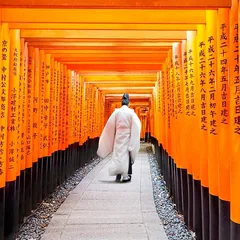
Fushimi Inari is one of the very few world-famous sights that is genuinely better after dark, and the reason is arithmetic rather than atmosphere. There is no closing time, the lower path is lit by lanterns, and the crowd that made the same hundred metres impassable at noon has gone home to dinner. Same gates, same price — nothing — and perhaps twenty people on the whole stretch.
Quick answer
Fushimi Inari Taisha is open all night and there is no entrance fee at any hour. The lower section including Senbon Torii is lit by stone lanterns, and after about 7 pm the crowd is largely gone. The last JR train back to Kyoto Station runs at roughly 11:30 pm. Above the Yotsutsuji crossroads the path is genuinely dark and unlit, so most night visitors stay below it.
Fushimi Inari at night, at a glance
- Open at night
- Yesthere is no gate and no closing time
- Entry fee
- Freeat every hour, all year
- Lighting
- Lower pathstone lanterns through Senbon Torii
- Above Yotsutsuji
- Unlitgenuinely dark; bring a torch or turn back
- People on a typical evening
- A handfulagainst thousands at noon
- Last train to Kyoto
- ~11:30 pmJR Nara Line, about five minutes
- Shops and amulet counter
- Closedthey shut around 5 pm
- Best window
- 7–10 pmquiet, lit, and trains still running
- Safety
- Gooda normal Kyoto residential area
- Guided night walks
- Rarethis is one to do yourself
What it is like
What is Fushimi Inari like at night?
Lit from below, empty, and perfectly ordinary to be in.
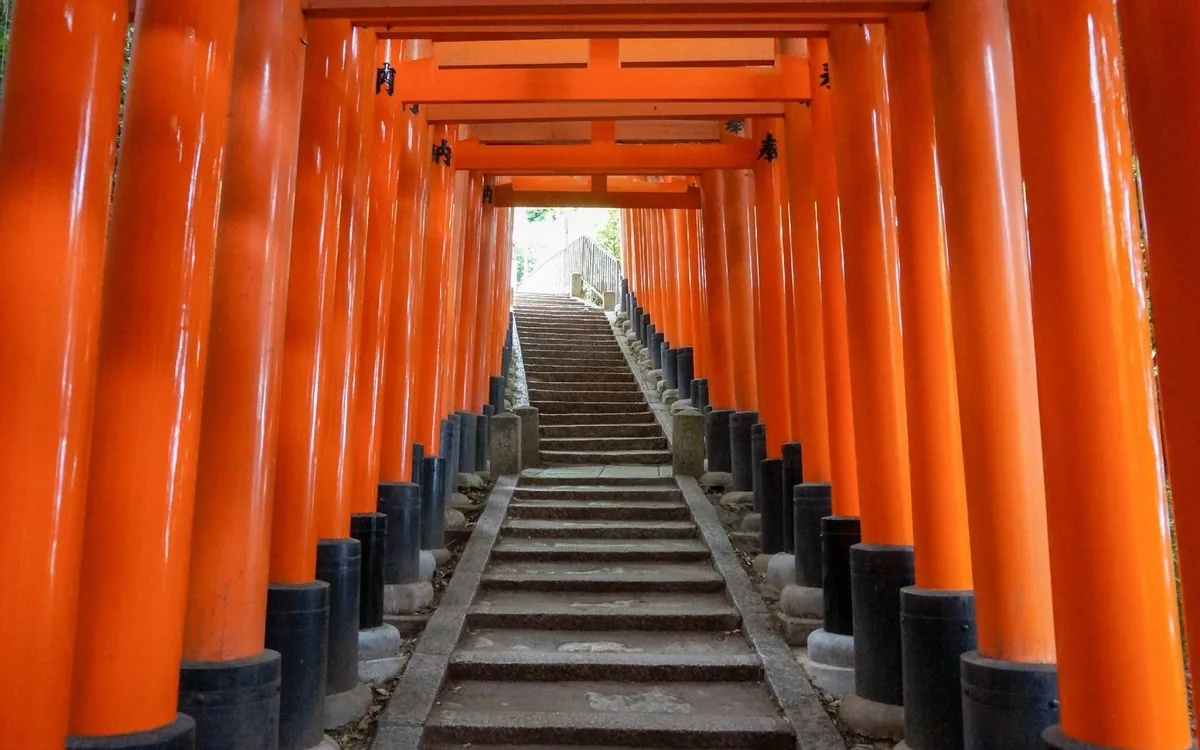
Quiet, orange and slightly unreal. The stone lanterns along the path throw light upward onto the underside of the gates, so the tunnel glows from inside while the forest around it goes black. In daylight the gates are a corridor; at night they are the only thing you can see.
The practical difference is the number of people. A summer evening at eight o’clock might have twenty or thirty visitors spread over the whole lower section, against several thousand at eleven in the morning. Photographs that are impossible during the day take themselves after dark.
It is also, and this surprises people, entirely normal. Fushimi Inari sits in an ordinary residential neighbourhood of southern Kyoto. Locals walk dogs on the lower paths, joggers use the steps, and the area is as safe as anywhere in Japan, which is to say very. Nobody will ask what you are doing there at nine at night.
What you do lose is everything that keeps daytime hours. The amulet counter, the fortunes, the ema plaques and the food stalls along the approach all close at about five. If you want to buy something, come twice, or come in the late afternoon and stay.
Doing it
Six things worth knowing about a night visit
The site is free and open, but a night visit is a slightly different exercise.
- The lit section ends at Yotsutsuji
Below that, lanterns. Above it, real darkness under a canopy of cedar. Most people stay below, and that is the sensible default without a torch.
- Come between seven and ten
Late enough that the day crowd has gone, early enough that the trains are still frequent and the walk feels ordinary rather than committed.
- The last train is about half past eleven
From Inari to Kyoto Station on the JR Nara Line. Check the board rather than trusting a website; the last service varies by day.
- Eat before you come
The stalls on the approach street close at around five. There is nothing open at the shrine after dark and nothing much immediately around it.
- A phone camera does better than you expect
The lanterns give a surprising amount of light in a narrow tunnel. Brace against a gate leg rather than carrying a tripod through a working shrine.
- Combine it with a late afternoon
Arrive at four, walk up to Yotsutsuji in daylight, come down as the lanterns come on. It is the best two-hour plan on this site and it costs a train fare.
If your flight lands late or your day filled up, this is the hour of Kyoto that is still available — and it is free.
The full hour-by-hour picture→Or early
Night or early morning: which is better at Fushimi Inari?
Morning for the gates. Night for the feeling. Neither costs anything.
Both solve the same problem — the crowd — and they solve it differently.
Early morning gives you daylight. The gates read as vermilion rather than orange, the black donor inscriptions are legible, the forest is visible around the tunnels, and you can climb the mountain safely to the summit if you want to. Before eight it is nearly as empty as midnight. The cost is getting out of bed at six.
Night gives you the light. Lanterns, glow, deep shadow between the gates, and an atmosphere that daylight cannot produce at any hour. It is easier to arrange and it fits after a full day elsewhere in Kyoto. The cost is that you see the tunnel and not the mountain.
If you have one visit and want photographs of the gates themselves, come early. If you have one visit and want the memory, come at night. If you have two, do both — they cost nothing, and most people who do both say the second visit was the better one.
Every trip, current fare
Tours, and why none of them come at night
Twelve tours, cheapest first. Every one of them is a daytime operation — night at Fushimi Inari is something you do yourself, for the price of a train ticket.
| Tour | Length | Price | Other stops | Cost per hour | Rating |
|---|---|---|---|---|---|
| Nara, Fushimi Inari & Arashiyama Bus TourThree sights, one coach, the lowest price here | 9–10 h | $50 | Nara, Arashiyama | $5.26 | 4.8 · 3,168 |
| Early Morning Fushimi Inari & ArashiyamaThe only one that beats the crowd to the gates | 6 h | $62 | Arashiyama, Kinkakuji | $10.33 | 4.9 · 1,597 |
| Kyoto by Bus: Nijo, Bamboo Grove & Fushimi InariNijo Castle and the bamboo, in English or Spanish | 11 h | $62 | Nijo, bamboo grove | $5.64 | 4.7 · 761 |
| Crowd-Free Kyoto: Fushimi Inari, Nijo & KinkakujiFive hours, and built around the early start | 5 h | $67 | Nijo, Kinkakuji | $13.40 | 4.5 · 23 |
| Private Tour: Fushimi Inari & BambooA licensed guide for your group alone | 3.5–6 h | $68 | Arashiyama bamboo | $14.32 | 4.9 · 6 |
| Kyoto Bus Tour: Fushimi, Kiyomizu, Kinkakuji & ArashiyamaThe five names everybody knows, in one day | 10 h | $81 | Kiyomizu, Kinkakuji, Arashiyama | $8.10 | 5.0 · 72 |
| Kyoto Full-Course: 10 Must-SeesTen stops for a single day in Kyoto | 9.5 h | $92 | Ten in total | $9.68 | 4.9 · 194 |
| Fushimi Inari, Kinkakuji & Bamboo GroveSix sights with every entry ticket included | 8.5–9 h | $93 | Kiyomizu, Kinkakuji, bamboo | $10.63 | 4.8 · 5,297 |
| Full-Day City Highlights Bike TourThe whole city by bicycle, lunch included | 8 h | $171 | Gion, Kiyomizu, bamboo | $21.38 | 4.9 · 56 |
| Customized Private Tour with Licensed GuideA licensed guide, and the route is yours | 4–8 h | $201 | Your choice | $33.50 | 4.8 · 523 |
| Private Highlights Tour with Guide and VehicleA car and driver for the whole day | Full day | $295 | Your choice | $36.88 | 4.9 · 121 |
| Private Highlights Tour with Guide and VehicleA driver-guide, and you write the itinerary | Full day | $415 | Your choice | $51.88 | 4.6 · 471 |
Common questions
Fushimi Inari at night, answered
Can you visit Fushimi Inari at night?
Yes. There is no gate, no closing time and no entrance fee, so the shrine and the mountain paths are open at any hour. The lower section including Senbon Torii is lit by stone lanterns.
Is Fushimi Inari lit up at night?
The lower path is, by stone lanterns that throw light up onto the underside of the gates. Above the Yotsutsuji crossroads there is no lighting at all and the path is genuinely dark.
Is it safe to visit Fushimi Inari at night?
Yes. It sits in an ordinary residential district of southern Kyoto, locals use the lower paths in the evening, and Japan is among the safest countries in the world for a night walk. The upper mountain in darkness is a different proposition and needs a torch.
What time is best for a night visit to Fushimi Inari?
Between about seven and ten in the evening. Late enough for the day crowd to have gone, early enough that trains are frequent and the last service is not a worry.
What time is the last train from Fushimi Inari?
Roughly 11:30 pm on the JR Nara Line back to Kyoto Station, a journey of about five minutes. The exact last service varies, so check the departure board when you arrive.
Are the shops open at Fushimi Inari at night?
No. The amulet counter, the fortunes and the food stalls along the approach close at around five in the afternoon. After dark there is the shrine and nothing else.
Is Fushimi Inari better at night or early morning?
Early morning if you want to see the gates and climb the mountain; night if you want the lantern light and the atmosphere. Both are nearly empty, and both are free.
Are there night tours of Fushimi Inari?
Very few, and none of the twelve tours on this site run after dark. A night visit is genuinely a do-it-yourself exercise: take the train, walk in, walk back.
Go deeper
More on Fushimi Inari Taisha
Fushimi Inari Shrine
What it is, what it costs, and the hour to arrive.
The gatesTorii gates Kyoto
Where the ten thousand gates are, and how to photograph them empty.
By colourThe red gates of Kyoto
What they are called, and the three other red buildings people mean.
ToursWhich tour is worth it
Six compared, and the two situations where a tour earns its price.
CostTickets and entrance fee
There are none. What a visit actually costs, and why other sights charge.
HoursWhen it is open
It never closes. Hour by hour, and when the crowd arrives.