The distinction
Fushimi Inari temple or shrine: the difference, and why it matters
A great many people search for the Fushimi Inari temple, and they find the right place, so no harm is done. But it is a shrine, not a temple, and in Japan those are two different religions with different buildings, different staff and different customs at the door. Knowing which one you are standing in changes what you do when you get there.
Quick answer
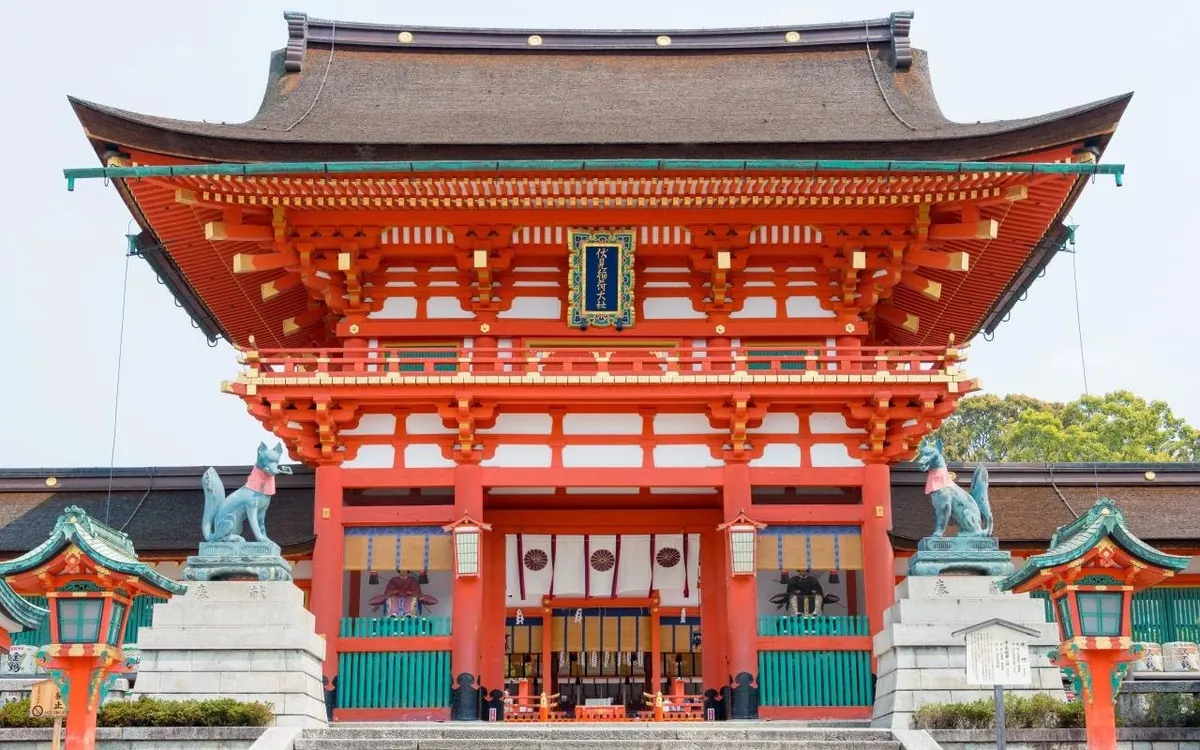
Fushimi Inari is a shrine, not a temple. It is Shinto, marked by torii gates and guarded by fox statues, and dedicated to the kami Inari. Buddhist temples in Japan have different gates, house images of the Buddha, and usually charge admission — Kinkakuji and Kiyomizu-dera are temples. Fushimi Inari is free, open 24 hours, and the Japanese name, Fushimi Inari Taisha, means grand shrine.
Shrine or temple, at a glance
- Fushimi Inari is
- A shrineShinto, not Buddhist
- Japanese name
- Taishameans "grand shrine"
- Marked by
- Torii gatestemples have a different gate
- Guarded by
- Foxestemples usually have lions or guardians
- Dedicated to
- Inaria kami, not a buddha
- Entry
- Freemost shrines are; most temples charge
- Open
- 24 hourstemples keep gate hours
- Kinkakuji is
- A templeBuddhist, and it charges
- Kiyomizu-dera is
- A templethe "-dera" ending says so
- Yasaka Shrine is
- A shrinethe "-jinja" ending says so
The difference
What is the difference between a shrine and a temple in Japan?
Torii gate and foxes: a shrine. Roofed gate and a pagoda: a temple.
They belong to two different religions that have coexisted in Japan for well over a thousand years, frequently on the same hillside, and the visual differences are consistent enough to identify from the road.
Shinto shrines are marked by a torii gate. They house kami — a word usually translated as gods or spirits, though neither is quite right — and the guardians at the entrance are animals: foxes at Inari shrines, lion-dogs at most others. Shrines are usually free. You bow at the torii, rinse your hands at the water basin, and at the hall you throw a coin, bow twice, clap twice, bow once.
Buddhist temples are marked by a large roofed gate rather than a torii. They house images of the Buddha, they often have a pagoda, and the guardians are fierce human figures. Most of the famous ones in Kyoto charge admission and keep gate hours. You do not clap at a temple; you press your hands together quietly.
The names give it away too, once you know. -jinja, -taisha and -gu are shrines. -dera, -tera and -ji are temples. So Fushimi Inari Taisha is a shrine, Kiyomizu-dera is a temple, and Kinkakuji — the golden pavilion — is a temple as well.
Telling them apart
Six signs you are standing in a shrine rather than a temple
Useful for the whole of Japan, not only for this one hillside.
- There is a torii at the entrance
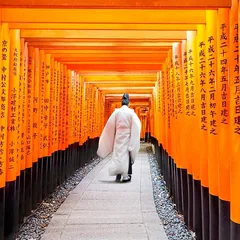
Two uprights and a crossbeam, usually vermilion. This is the single most reliable marker there is, and Fushimi Inari has about ten thousand of them.
- The guardians are animals
Foxes here, because it is an Inari shrine. Lion-dogs at most other shrines. Temples have fierce human guardian figures in the gate instead.
- There is a water basin at the entrance
A stone trough with ladles, for rinsing hands and mouth before you approach. Temples have them too, but at a shrine it is nearly universal.
- People clap
Two bows, two claps, one bow at the offering hall. Clapping is a Shinto practice; at a Buddhist temple you press your palms together in silence.
- It is free and open
Not a rule, but a strong tendency. Most shrines charge nothing and never close; most famous temples charge and shut at five.
- The name ends in -jinja, -taisha or -gu
Fushimi Inari Taisha, Yasaka Jinja, Heian Jingu. If it ends in -dera or -ji it is a temple: Kiyomizu-dera, Kinkakuji, Tenryuji.
Several tours here pair the shrine with the temples that do charge — and the ticket price is the difference worth checking.
What costs money in Kyoto and what does not→What to do
What do you do when you arrive at Fushimi Inari?
Bow, rinse, coin, two bows, two claps, one bow. Then the mountain.
Nothing is compulsory and nobody is watching, but there is a customary sequence and it takes about a minute.
Bow once at the torii before you pass under it. Walk to one side rather than down the exact centre of the path, which is traditionally left for the kami. At the water basin — temizuya — take the ladle in your right hand, rinse your left, swap and rinse your right, then pour a little into your cupped left hand to rinse your mouth. Do not drink from the ladle and do not spit into the basin.
At the offering hall, throw a coin into the box, bow twice, clap twice, hold your hands together for a moment, then bow once more. A five-yen coin is traditional because the word for five yen sounds like the word for a good relationship, which is exactly the kind of pun Japanese religious practice is full of.
Then walk up. Photography is fine everywhere on the mountain; the only places you will see signs against it are a few of the inner halls, and they are clearly marked.
Every trip, current fare
Tours that include the shrine and the temples
Twelve tours, cheapest first. Fushimi Inari is free on all of them; where these differ is which paying temples are inside the ticket.
| Tour | Length | Price | Other stops | Cost per hour | Rating |
|---|---|---|---|---|---|
| Nara, Fushimi Inari & Arashiyama Bus TourThree sights, one coach, the lowest price here | 9–10 h | $50 | Nara, Arashiyama | $5.26 | 4.8 · 3,168 |
| Early Morning Fushimi Inari & ArashiyamaThe only one that beats the crowd to the gates | 6 h | $62 | Arashiyama, Kinkakuji | $10.33 | 4.9 · 1,597 |
| Kyoto by Bus: Nijo, Bamboo Grove & Fushimi InariNijo Castle and the bamboo, in English or Spanish | 11 h | $62 | Nijo, bamboo grove | $5.64 | 4.7 · 761 |
| Crowd-Free Kyoto: Fushimi Inari, Nijo & KinkakujiFive hours, and built around the early start | 5 h | $67 | Nijo, Kinkakuji | $13.40 | 4.5 · 23 |
| Private Tour: Fushimi Inari & BambooA licensed guide for your group alone | 3.5–6 h | $68 | Arashiyama bamboo | $14.32 | 4.9 · 6 |
| Kyoto Bus Tour: Fushimi, Kiyomizu, Kinkakuji & ArashiyamaThe five names everybody knows, in one day | 10 h | $81 | Kiyomizu, Kinkakuji, Arashiyama | $8.10 | 5.0 · 72 |
| Kyoto Full-Course: 10 Must-SeesTen stops for a single day in Kyoto | 9.5 h | $92 | Ten in total | $9.68 | 4.9 · 194 |
| Fushimi Inari, Kinkakuji & Bamboo GroveSix sights with every entry ticket included | 8.5–9 h | $93 | Kiyomizu, Kinkakuji, bamboo | $10.63 | 4.8 · 5,297 |
| Full-Day City Highlights Bike TourThe whole city by bicycle, lunch included | 8 h | $171 | Gion, Kiyomizu, bamboo | $21.38 | 4.9 · 56 |
| Customized Private Tour with Licensed GuideA licensed guide, and the route is yours | 4–8 h | $201 | Your choice | $33.50 | 4.8 · 523 |
| Private Highlights Tour with Guide and VehicleA car and driver for the whole day | Full day | $295 | Your choice | $36.88 | 4.9 · 121 |
| Private Highlights Tour with Guide and VehicleA driver-guide, and you write the itinerary | Full day | $415 | Your choice | $51.88 | 4.6 · 471 |
Common questions
Shrine or temple, answered
Is Fushimi Inari a shrine or a temple?
A shrine. It is Shinto, marked by torii gates, guarded by foxes and dedicated to the kami Inari. The Japanese name, Fushimi Inari Taisha, literally means grand shrine.
Why do people call it the Fushimi Inari temple?
Because English uses the two words loosely and most visitors have no reason to know the difference. It is a very common search and it finds the right place — but the distinction is real in Japan and worth knowing before you arrive.
What is the difference between a shrine and a temple in Japan?
Shrines are Shinto: torii gate, animal guardians, kami, usually free and usually open. Temples are Buddhist: a roofed gate, often a pagoda, images of the Buddha, and most of the famous ones charge admission and close at five.
Is Kinkakuji a shrine or a temple?
A temple. The golden pavilion is Buddhist, the name ending -ji says so, and it charges admission. It appears on several of the tours on this page for exactly that reason.
Do you have to pay at Japanese shrines?
Usually not. Most Shinto shrines, including Fushimi Inari, are free to enter. Most famous Buddhist temples charge a few hundred yen. That single rule explains most of a Kyoto budget.
What is the etiquette at Fushimi Inari?
Bow at the torii, walk to one side of the path, rinse your hands at the water basin, then at the hall throw a coin, bow twice, clap twice and bow once. None of it is enforced and all of it is appreciated.
Can you take photographs at Fushimi Inari?
Yes, everywhere on the mountain and in the main courtyard. A few inner halls are marked otherwise and the signs are clear. It is a working shrine, so step aside for people who are there to pray.
Go deeper
More on Fushimi Inari Taisha
Fushimi Inari Shrine
What it is, what it costs, and the hour to arrive.
The gatesTorii gates Kyoto
Where the ten thousand gates are, and how to photograph them empty.
By colourThe red gates of Kyoto
What they are called, and the three other red buildings people mean.
ToursWhich tour is worth it
Six compared, and the two situations where a tour earns its price.
CostTickets and entrance fee
There are none. What a visit actually costs, and why other sights charge.
HoursWhen it is open
It never closes. Hour by hour, and when the crowd arrives.