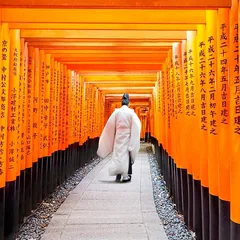
Two sights, one day
Fushimi Inari and the bamboo forest: how to do both in one day
These two are the pair almost every first-time visitor wants, and they sit on opposite sides of Kyoto about an hour apart. There is a small bamboo grove on Mount Inari itself, which catches a lot of people out; the famous one is at Arashiyama, on the western edge of the city. Doing both in a day is entirely possible, and how you do it decides how much of the day is left.
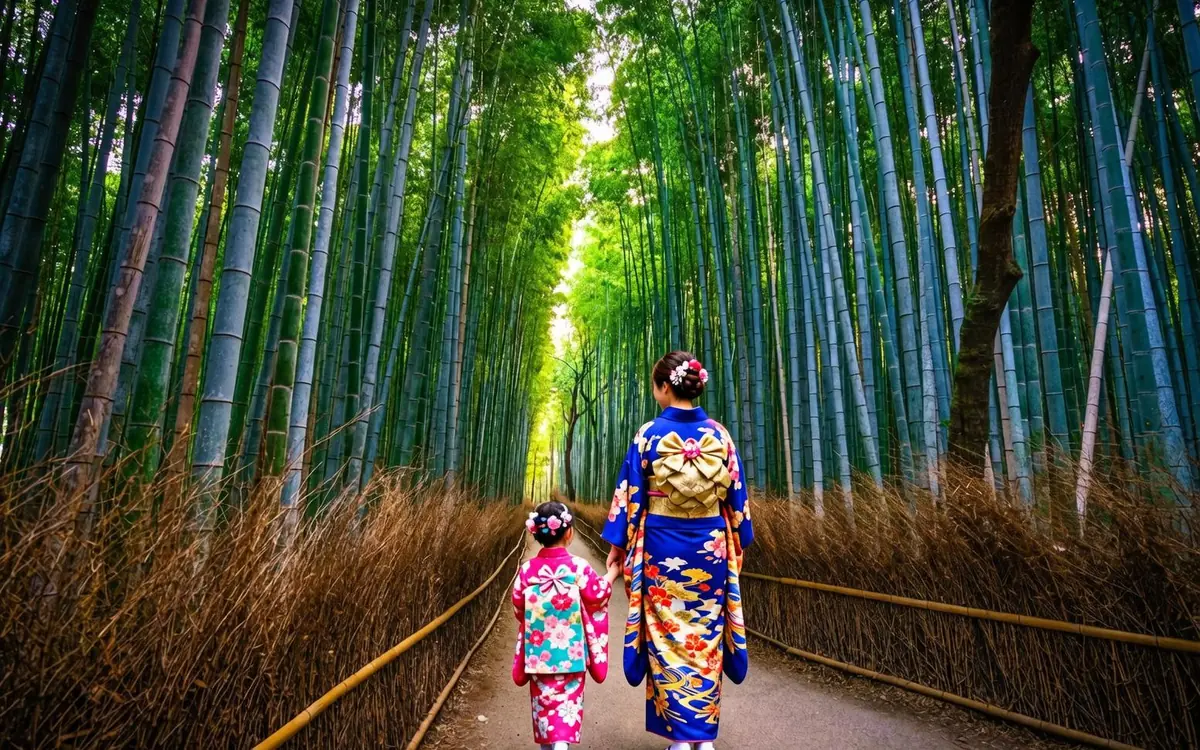
Quick answer
The famous bamboo forest is at Arashiyama on the western edge of Kyoto, about an hour from Fushimi Inari on the opposite side of the city. Both are free. There is bamboo on Mount Inari itself, but it is small and not the grove people mean. Doing both by train takes about two hours of travel across the day; the coach and private tours on this page do the pair in one run.
Fushimi Inari and Arashiyama, at a glance
- Distance apart
- ~1 houropposite sides of Kyoto
- Both cost
- Freethe grove and the shrine alike
- Arashiyama grove length
- ~500 mshorter than the photographs suggest
- Grove open
- 24 hoursand lit during the December illumination
- By train
- 2 changesJR to Kyoto Station, then JR or Randen west
- Best order
- Fushimi Inari firstit rewards an early start far more
- Bamboo on Mount Inari
- A small standnot the famous grove
- Tours that do both
- 4 of 6from $50
- Also at Arashiyama
- Togetsukyo bridgeand the Katsura river
- Crowd at the grove
- Heavy 9 am–4 pmthe same problem, the same solution
Where the bamboo is
Is there a bamboo forest at Fushimi Inari?
The famous grove is at Arashiyama, an hour away, and it is 500 metres long.
Not the one you are thinking of. There is bamboo on Mount Inari — a stand of it on the upper paths, pleasant and quiet and photographed by almost nobody — but the famous bamboo forest of Kyoto is the Arashiyama grove, and it is about an hour away on the far side of the city.
This trips people up constantly, and it is easy to see why: the two sights appear together in every Kyoto itinerary, on every tour listing and in every photograph set, so they read as neighbours. They are not. Fushimi Inari is in the southern ward of Fushimi, on the Nara railway line. Arashiyama is on the western edge, at the foot of a different set of hills, and getting between them means crossing the whole city.
The Arashiyama grove itself is worth knowing the truth about as well. It is roughly five hundred metres of path through very tall bamboo, and it takes about fifteen minutes to walk. It is free, it is open at all hours, and between nine and four it is as crowded as Senbon Torii — which means the solution is identical: go early.
Doing both
Six ways to fit Fushimi Inari and the bamboo into one day
Ordered from the version that costs a train fare to the one that costs a day tour.
- Fushimi Inari at dawn, Arashiyama by mid-morning
The best free plan there is. Be at the gates by seven, back at Kyoto Station by nine, and in the bamboo before the grove fills. Two train journeys and no tickets.
- Arashiyama first, Fushimi Inari at night
The other way round, and it works because Fushimi Inari is lantern-lit and open after dark. Bamboo in the morning, temples in the afternoon, gates in the evening.
- Take the coach day and let it drive
The tour at $50 pairs both with Nara, and it is the cheapest listing on this page. You arrive mid-morning at each, which is the trade.
- The early-morning tour, for the gates without people
$62 for six hours that start early enough to have Senbon Torii to yourself, then Arashiyama and Kinkakuji. The only listing here that beats the crowd.
- The six-sight day, with the tickets included
$93 covers Kiyomizu, Sanjusangendo, Tenryuji, the bamboo, Kinkakuji and Fushimi Inari, with every entry ticket and lunch. The most reviewed tour on this page.
- A private car, if walking is the problem
From $201. Priced per vehicle rather than per head, which for four people is a different calculation from the one it first looks like.
Seven of the twelve tours on this site reach both sights in a day. The cheapest is also the one that adds Nara.
Every tour compared→The journey
How do you get from Fushimi Inari to Arashiyama?
Back to Kyoto Station, change to the Sagano line, about an hour in total.
By train, with one change, in about an hour door to door.
From Inari station take the JR Nara Line back to Kyoto Station — two stops, five minutes. At Kyoto Station change to the JR Sagano line, also called the San-in line, and ride it to Saga-Arashiyama. That leg is about fifteen minutes, and the bamboo grove is roughly ten minutes’ walk from the station. With the connection, call the whole thing an hour.
The Japan Rail Pass covers both legs, since both are JR services. That is unusual for Kyoto and worth using: most of the city’s sights are reached on subway or private lines the pass does not cover.
The alternative is the Randen tram from central Kyoto, which is slower and more charming and not covered by the pass. If you are travelling with children it is the better memory; if you are trying to reach the bamboo before the crowd, take the JR.
Every trip, current fare
Tours that do both in one day
Twelve tours, cheapest first, with the other stops each one reaches. Seven of the twelve cover the shrine and the bamboo in a single run.
| Tour | Length | Price | Other stops | Cost per hour | Rating |
|---|---|---|---|---|---|
| Nara, Fushimi Inari & Arashiyama Bus TourThree sights, one coach, the lowest price here | 9–10 h | $50 | Nara, Arashiyama | $5.26 | 4.8 · 3,168 |
| Early Morning Fushimi Inari & ArashiyamaThe only one that beats the crowd to the gates | 6 h | $62 | Arashiyama, Kinkakuji | $10.33 | 4.9 · 1,597 |
| Kyoto by Bus: Nijo, Bamboo Grove & Fushimi InariNijo Castle and the bamboo, in English or Spanish | 11 h | $62 | Nijo, bamboo grove | $5.64 | 4.7 · 761 |
| Crowd-Free Kyoto: Fushimi Inari, Nijo & KinkakujiFive hours, and built around the early start | 5 h | $67 | Nijo, Kinkakuji | $13.40 | 4.5 · 23 |
| Private Tour: Fushimi Inari & BambooA licensed guide for your group alone | 3.5–6 h | $68 | Arashiyama bamboo | $14.32 | 4.9 · 6 |
| Kyoto Bus Tour: Fushimi, Kiyomizu, Kinkakuji & ArashiyamaThe five names everybody knows, in one day | 10 h | $81 | Kiyomizu, Kinkakuji, Arashiyama | $8.10 | 5.0 · 72 |
| Kyoto Full-Course: 10 Must-SeesTen stops for a single day in Kyoto | 9.5 h | $92 | Ten in total | $9.68 | 4.9 · 194 |
| Fushimi Inari, Kinkakuji & Bamboo GroveSix sights with every entry ticket included | 8.5–9 h | $93 | Kiyomizu, Kinkakuji, bamboo | $10.63 | 4.8 · 5,297 |
| Full-Day City Highlights Bike TourThe whole city by bicycle, lunch included | 8 h | $171 | Gion, Kiyomizu, bamboo | $21.38 | 4.9 · 56 |
| Customized Private Tour with Licensed GuideA licensed guide, and the route is yours | 4–8 h | $201 | Your choice | $33.50 | 4.8 · 523 |
| Private Highlights Tour with Guide and VehicleA car and driver for the whole day | Full day | $295 | Your choice | $36.88 | 4.9 · 121 |
| Private Highlights Tour with Guide and VehicleA driver-guide, and you write the itinerary | Full day | $415 | Your choice | $51.88 | 4.6 · 471 |
Common questions
Fushimi Inari and the bamboo forest, answered
Is there a bamboo forest at Fushimi Inari?
There is a small stand of bamboo on the upper paths of Mount Inari, but it is not the famous one. The bamboo forest people mean is at Arashiyama, on the western edge of Kyoto, about an hour away.
How far is Fushimi Inari from the bamboo forest?
About an hour by train with one change: JR Nara Line back to Kyoto Station, then the JR Sagano line to Saga-Arashiyama, then a ten-minute walk. They are on opposite sides of the city.
Can you do Fushimi Inari and Arashiyama in one day?
Yes, comfortably, if you start early. The best free plan is Fushimi Inari at dawn and the bamboo by mid-morning, before either fills up. Seven of the twelve tours on this page do both in one run.
Is the Arashiyama bamboo forest free?
Yes, and it is open at all hours, like Fushimi Inari. The grove is about five hundred metres long and takes roughly fifteen minutes to walk. Some of the gardens and temples around it do charge.
Which should you see first, Fushimi Inari or the bamboo?
Fushimi Inari, if you are going early — it rewards a dawn arrival more than the grove does, and it is on the way out of the city rather than across it. Alternatively do the bamboo in the morning and Fushimi Inari after dark, when it is lantern-lit.
How long does the Arashiyama bamboo grove take?
About fifteen minutes to walk its five hundred metres, longer if you are photographing it. Most people spend two or three hours in Arashiyama altogether, with the bridge, the river and Tenryuji temple.
Is the bamboo forest crowded?
Between about nine in the morning and four in the afternoon, very. The solution is the same as at Fushimi Inari: arrive early. Both are free and both are open all night.
Go deeper
More on Fushimi Inari Taisha
Fushimi Inari Shrine
What it is, what it costs, and the hour to arrive.
The gatesTorii gates Kyoto
Where the ten thousand gates are, and how to photograph them empty.
By colourThe red gates of Kyoto
What they are called, and the three other red buildings people mean.
ToursWhich tour is worth it
Six compared, and the two situations where a tour earns its price.
CostTickets and entrance fee
There are none. What a visit actually costs, and why other sights charge.
HoursWhen it is open
It never closes. Hour by hour, and when the crowd arrives.